
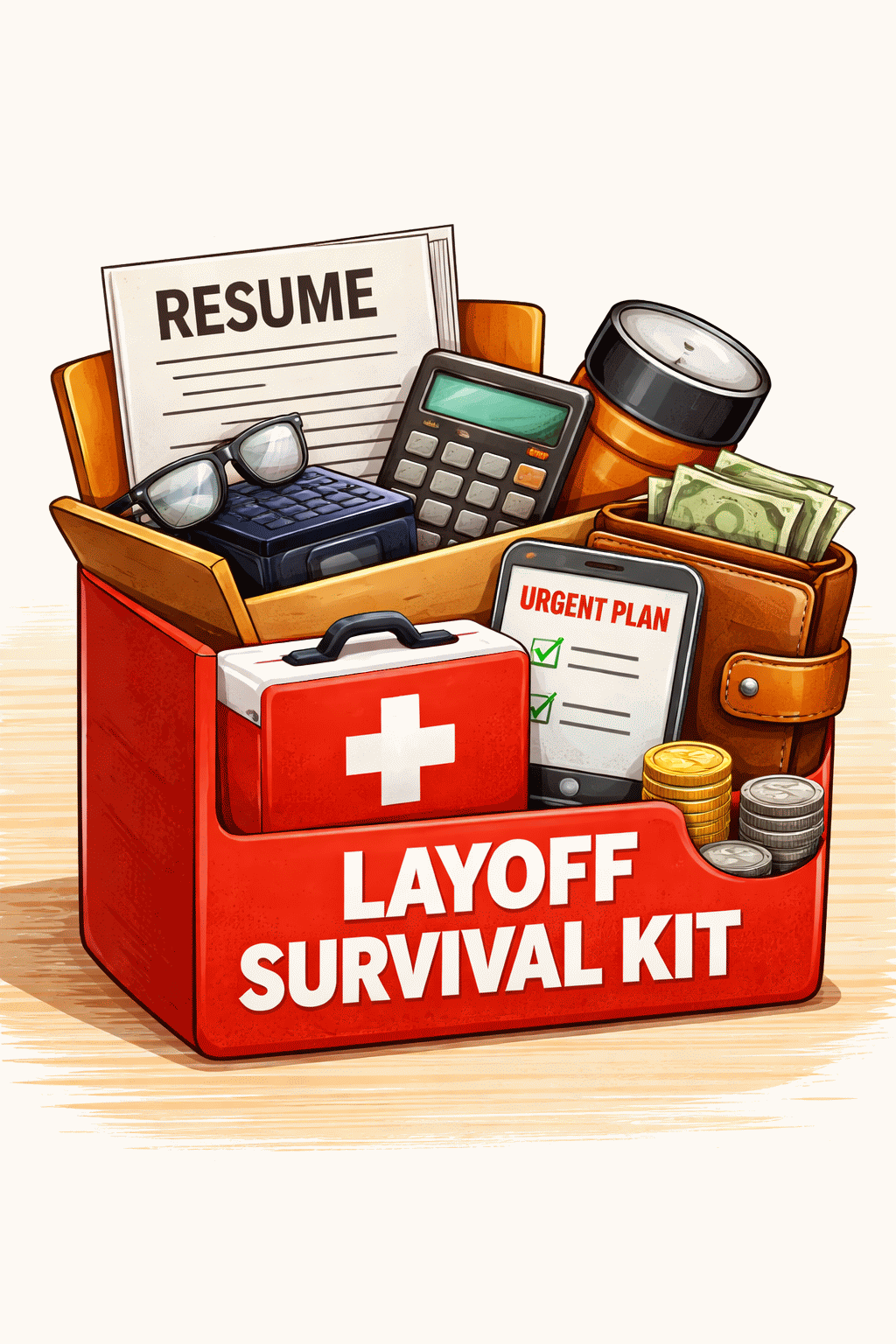
A practical survival manual for the first shock, the first paperwork, and the first money decisions
Getting laid off is not just a career event. It is an admin event, a money event, a health insurance event, and sometimes a shame event. The dangerous part is that all of those hit at once.
This micro crisis guide is built for that exact moment.
It is not legal advice, tax advice, or state-specific benefits advice. Rules vary by employer, state, plan, and country. In the U.S., unemployment is generally handled through the state where you worked, COBRA can allow temporary continuation of employer coverage, and loss of job-based coverage can trigger a Marketplace Special Enrollment Period. (DOL)
1) What this micro crisis manual is for
Use this if:
- you were just laid off
- you were told a reduction is happening soon
- you were given separation papers and do not know what matters
- you are worried about insurance, money, and what to do first
- you need to stop panic from making expensive decisions
This guide helps you:
- secure documents
- slow down pressure to sign
- protect insurance timing
- get unemployment moving
- stabilize cash decisions
- restart your job search without drama
2) The first rule: this is now an operations problem
Right now, your job is not “feel okay.”
Your job is not “reinvent yourself.”
Your job is not “write a beautiful LinkedIn post.”
Your first job is:
capture facts, preserve options, avoid time-sensitive mistakes.
That means:
- get things in writing
- do not sign fast
- confirm dates
- protect health coverage
- start claim/admin processes early
- pause emotional overreaction
3) First 15 minutes: do these first
If the layoff conversation just happened, do this in order:
Immediate actions
-
Save every email, PDF, benefit notice, and separation document.
-
Write down:
- date and time of the meeting
- who was present
- exact words used about the reason
- your last day worked
- your official separation date, if stated
-
Ask for all terms in writing.
-
Ask when your health insurance ends.
-
Ask when you should expect COBRA or continuation coverage information.
-
Ask for severance deadline details in writing.
-
Ask for PTO balance / payout information in writing.
-
Save non-confidential evidence of your work history and achievements that you are allowed to retain.
-
Do not post publicly yet.
-
Do not sign anything in the room unless you fully understand it.
What not to do in the first 15 minutes
- do not argue the whole event live unless you are specifically disputing facts
- do not say “it’s fine” and then forget details
- do not assume insurance lasts through the month
- do not let embarrassment stop you from getting documents
4) The first email to HR
Use this if they have not already sent a clean written package.
Subject: Request for separation documents and benefits information
Hello [HR Name],
Thank you for meeting with me today. Please send me the following in writing:
- My official separation date
- Any severance terms and the deadline to review/respond
- My remaining PTO balance and payout details
- The date my health insurance coverage ends
- Information about COBRA or other continuation coverage
- Instructions regarding final pay, equipment return, and unemployment-related documentation
I will review the materials carefully once received.
Thank you,
[Your Name]
5) What matters most in the paperwork
People often stare at severance and miss the more urgent items.
Your real checklist
Look for:
- official separation date
- last day worked
- severance amount
- deadline to sign
- release language
- non-disparagement language
- non-compete / non-solicit references
- PTO payout details
- final paycheck details
- insurance end date
- COBRA / continuation process
- equipment return requirements
- reference / employment verification process
What is time-sensitive
These matter fastest:
- insurance end date
- severance response deadline
- unemployment filing timing
- any deadline to return equipment
- any deadline to elect continuation coverage or Marketplace replacement coverage
Loss of job-based coverage can trigger a Marketplace Special Enrollment Period, and HealthCare.gov says people generally need to apply within 60 days of losing that coverage. Coverage can start the first day of the month after the loss of job-based coverage. HealthCare.gov also notes that you may need to submit proof of the loss. (HealthCare.gov)
6) If they pressure you to sign fast
A lot of people sign too quickly because they feel stunned, ashamed, or cornered.
You do not need to be aggressive. You need to be controlled.
Script: basic delay
Thank you. I need time to review these materials carefully before signing anything. Please confirm the review deadline in writing.
Script: if they push in the meeting
I’m not declining anything. I’m taking time to read and understand the documents before responding. Please email me the final copies and the response deadline.
Script: if they say “this is standard”
I understand. I still need time to review it properly before signing.
7) Health insurance triage: do not guess
This is where people make expensive mistakes.
In the U.S., COBRA can let eligible workers and families temporarily maintain employer coverage after job loss or other qualifying events. COBRA is often more expensive than active employee coverage because the employer may stop subsidizing the premium; Labor Department materials say the plan can generally charge up to 102% of the cost of coverage. (DOL)
At the same time, losing job-based coverage can create a Marketplace Special Enrollment Period. HealthCare.gov says this is generally available within 60 days before or 60 days after losing job-based coverage, and proof may be required. (HealthCare.gov)
Your immediate insurance questions
Ask:
- What exact date does my current coverage end?
- Will I receive COBRA election materials, and when?
- What is the monthly COBRA premium?
- Are dental and vision included?
- Is there any employer subsidy for part of the continuation period?
- Do I have enough information to compare with Marketplace plans?
Quick decision path
COBRA may fit better if:
- you need continuity with the same doctors immediately
- you are in active treatment
- you do not want provider disruption right now
Marketplace may fit better if:
- you need lower monthly cost
- your household income changed sharply
- you are comfortable comparing new plans
Important mistake
Do not assume “I’ll deal with insurance later.”
That is exactly how people end up with a coverage gap or rushed bad decisions.
8) Unemployment: start earlier than you think
The U.S. Department of Labor says you should contact the state unemployment program as soon as possible after becoming unemployed, and generally file in the state where you worked. If you worked in another state or in multiple states, the agency where you now live may help you figure out how to file. (DOL)
Gather this first
- legal name
- address
- Social Security number or state-required identifier
- work authorization docs if required
- employer name and address
- dates worked
- separation date
- wage/pay info if requested
- bank info for direct deposit
Script: ask HR/payroll for basics
Please confirm my official separation date, final day worked, and any employer details I may need for an unemployment claim.
Mistake to avoid
Do not wait because you feel embarrassed or want to “see what happens first.”
9) WARN: most people ignore it, but sometimes it matters
If this was part of a larger layoff or closure, the WARN Act may be relevant in the U.S. Department of Labor materials say WARN generally applies to certain employers with 100 or more employees and, with exceptions, can require 60 days’ advance notice for certain plant closings and mass layoffs. DOL also notes WARN enforcement is through private action in federal court rather than by DOL administrative enforcement. (DOL)
Why you care
Not every layoff triggers WARN, and this is not something to bluff about casually. But if a large number of employees were cut or a site was closed suddenly, it may be worth checking whether WARN issues are being discussed.
Practical rule
If lots of people were let go at once, note it.
Do not assume it gives you something automatically.
Do note it as a possible follow-up question if the situation fits.
10) Emergency cash triage: the first 72 hours
The goal is not to build a perfect budget.
The goal is to stop leakage.
10-minute money drill
Write these down:
- cash in checking/savings
- paycheck/final pay still expected
- severance expected, if any
- rent/mortgage due date
- health insurance deadline
- minimum required debt payments in next 30 days
- essential bills in next 14 days
- subscriptions to pause or cut
Sort all expenses into 3 buckets
Keep no matter what
- rent
- medicine
- utilities
- food
- transport
- phone/internet needed for job search and life
Review immediately
- subscriptions
- app/software tools
- eating out
- shopping
- convenience spending
Negotiate or contact
- lender
- landlord
- utilities
- insurance providers
- service providers
Script: hardship contact
I recently experienced a job loss and need to discuss available hardship options, payment flexibility, or any temporary relief programs.
11) The “do not do this” page
In the first week, do not:
- sign fast because you feel small
- disappear and miss deadlines
- assume HR will volunteer every important detail
- delay unemployment because you “might find something soon”
- ignore insurance timing
- post a rage thread on LinkedIn
- spend emotionally
- try to rebuild your entire identity in one night
12) Resume rescue: enough, not perfect
You do not need a masterpiece this week.
You need a credible, current resume and a decent LinkedIn profile.
30-minute resume reset
- update title and end date
- add 3 measurable outcomes
- remove obvious clutter
- move strongest recent work up
- save both editable and PDF versions
- update LinkedIn headline and top summary line
Achievement prompts
- Increased ______ by ______
- Reduced ______ by ______
- Built / launched ______ used by ______
- Led ______ across ______
- Improved process / revenue / speed / quality by ______
Bad move
Do not spend five hours picking fonts while your benefits and deadlines are unresolved.
13) Outreach: what to say without sounding broken
Script: trusted contact
Hi [Name], I wanted to let you know I was recently impacted by a layoff and am now exploring new opportunities in [area]. My recent work focused on [2–3 strengths]. If you hear of roles or teams where that background would be relevant, I’d appreciate the lead.
Script: former manager reference check
Hi [Name], I’m beginning my search after the layoff and wanted to ask whether you’d be comfortable serving as a reference for my work on [project/team]. No pressure either way.
Script: recruiter note
Hi [Name], I’m exploring new roles after a recent layoff. My background is strongest in [function], especially [2–3 specifics]. I’d be glad to share a resume if useful.
14) Triage timeline: first 2 hours, first 2 days, first 2 weeks
First 2 hours
- save all documents
- request missing documents in writing
- confirm insurance end date
- confirm severance deadline
- write down facts from the conversation
- tell one trusted person, not the internet
First 2 days
- compare COBRA vs Marketplace path
- gather unemployment info
- do cash triage
- update resume basics
- create a simple job-search tracker
- save non-confidential proof of work/achievements
First 2 weeks
- file unemployment if eligible
- make your insurance decision
- send targeted outreach
- review severance carefully before deadline
- stabilize spending
- set a weekly search routine instead of doom-scrolling
15) If you have severance: what to review carefully
Not every layoff includes severance, and severance is not automatically required in the general way many people assume. The key practical point is to review what is actually offered and what you are giving up in return.
Review checklist
Look for:
- amount
- payment timing
- tax withholding language
- whether PTO is separate
- benefit continuation language
- release / claims waiver
- confidentiality
- non-disparagement
- non-solicit / non-compete references
- deadline to sign
- revocation language, if included
Practical rule
Do not confuse:
- final pay
- PTO payout
- severance
- benefits continuation
Those are separate buckets.
16) Document tracker
Use this section like an operator.
Requested / received tracker
- separation letter received
- severance agreement received
- response deadline confirmed
- PTO balance confirmed
- final paycheck date confirmed
- insurance end date confirmed
- COBRA info received
- unemployment employer details gathered
- equipment return instructions received
- reference / verification process clarified
17) Conversation log
Keep a plain record.
Date:
Who:
Topic:
What they said:
What I asked:
Next step:
Deadline:
This is boring, but it prevents confusion later.
18) Panic mode version
If you can barely think, do only this:
- Get the documents.
- Confirm the insurance end date.
- Ask for the severance deadline in writing.
- Gather unemployment basics.
- Pause unnecessary spending.
- Tell one trusted person.
- Do not sign in shock.
That is enough for today.
19) Calm mode version
Once the initial hit settles:
- compare insurance options
- file unemployment
- review severance carefully
- update resume
- contact trusted people
- set a weekly search cadence
- avoid turning this into private shame theater
20) The most expensive mistakes
Mistake 1: signing too fast
Because you wanted the moment to end.
Mistake 2: ignoring insurance timing
Because you assumed you had more time.
Mistake 3: delaying unemployment
Because it felt emotionally easier to postpone.
Mistake 4: focusing on LinkedIn optics first
Instead of money, benefits, and documents.
Mistake 5: vanishing
You do not need to be cheerful, but you do need to stay operational.
21) One-page summary you can actually use
If you were just laid off, do this:
- get every term in writing
- confirm separation date
- confirm insurance end date
- ask about COBRA / continuation coverage
- gather info for unemployment
- do not sign immediately
- pause emotional spending
- update resume enough to function
- tell trusted people specifically how they can help
COBRA may let eligible workers keep employer coverage temporarily, though often at much higher cost than active-employee pricing. Marketplace enrollment may also be available after loss of job-based coverage, generally within a 60-day Special Enrollment Period. Unemployment claims are generally filed with the state where you worked. WARN may be relevant in certain larger layoffs, but it is not automatic and is fact-specific. (DOL)

